Preparing for your spring garden starts in the wintertime (well, autumn really, but you see the fruits of your labor in the wintertime). I have always found the activity of mapping our future garden to be so cozy and peaceful. I like to snuggle up by the fire with my garden notebook and get planning. I always write in pencil because things tend to change as the planning gets growing (sorry…)
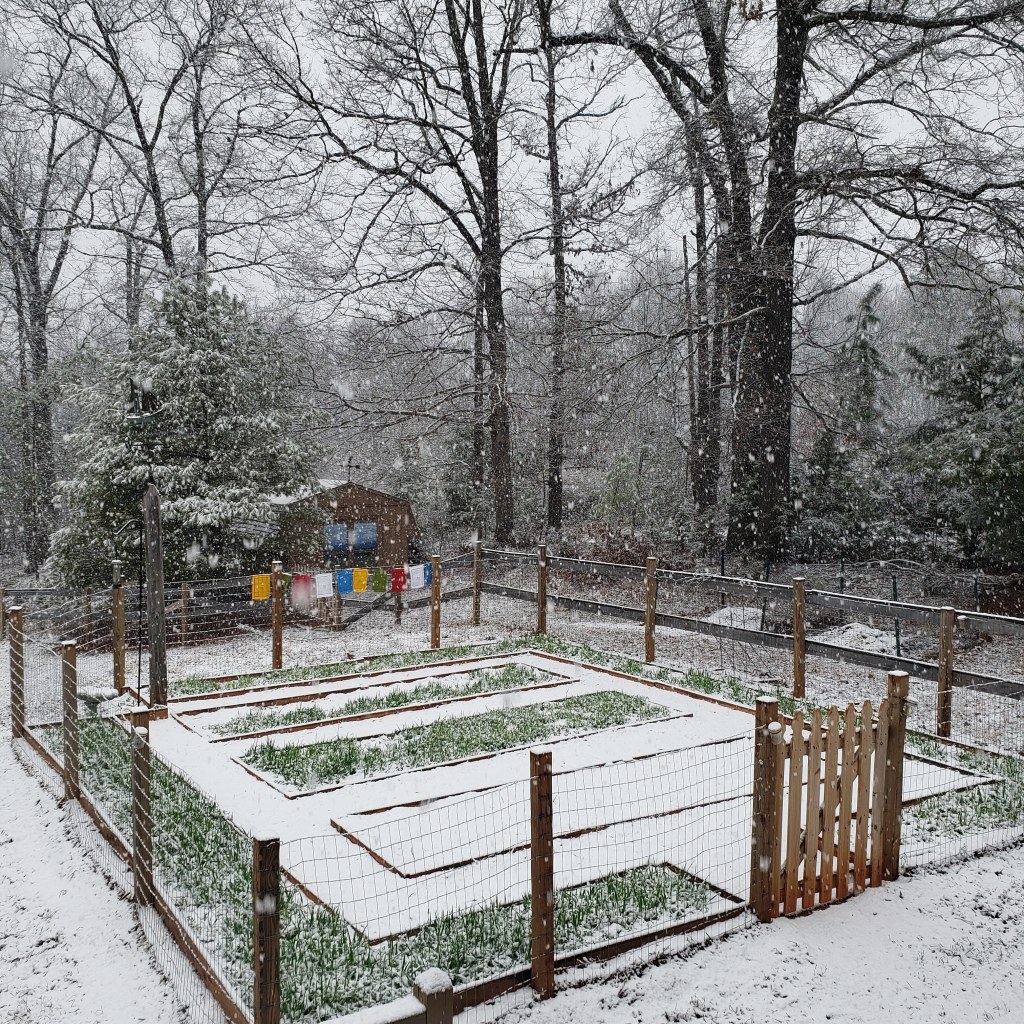
Gorgeous view from the kitchen window!
Our outdoor beds are currently a beautiful, magical mix of cover crop, baby garlic just poking through the soil, and…snow. Glorious snow and the things it does for us! I love the stillness and quiet that settles on the forest after a good snow, the sprinkling tinkling sound of the snow as it falls on the trees and hedges. Of course, this time of year is also a busy time underground. As frost settles upon us, our spring flower bulbs are pondering their emergence in a few months. Our garlic is stretching itself for some winter sun above soil, but below ground is building itself into juicy, spicy cloves. There is no garlic like fresh garlic! If you’re doing a winter garden, you may even have some broccoli or spinach hanging around.
We skipped a winter garden this year in lieu of cover crop. It was time our soil got a boost after working so hard for three of the four seasons in 2019! Ours is a tailored mix from our favorite local homesteading store. It is red clover, oats, hairy vetch, and tiller radish. Each has a purpose. The red clover provides a nice little foraging cover for our friendly critters, while supplying Nitrogen into the soil for the future crops. Plus, if winter leaves you with any usable red clover, it is a medicinal herb that can be used in teas or salves. Oats help to recycle nutrients and prevent erosion. Hairy vetch is a major Nitrogen supplier as well, and also improves soil tilth, or the “looseness” of your soil that will making spring planting easier. Finally, my favorite little science nugget of the cover crop quartet…tiller radish! Tiller radish puts out large, conical tap roots, that will actually end up dying and decomposing over the course of winter. Thus, when you remove your cover crop in the spring, or mulch it, the tiller radish has left you some lovely, perfectly formed pockets in which to deposit nutrients, green sand, or anything your soil needs. What a great garden buddy!
Cover crops like these should be planted in mid August to mid September, depending on your zone. We got ours in toward the end of August this year, and I think next year we will plant a little earlier with the hopes of the cover crops growing a little taller. They came in full and lush, but only ever got to be about 6 inches tall. The garden beds remind me of giant microgreen trays from our indoor farm!
As you read this post, I hope it has helped you to think about ways to invigorate your soil for the spring. Essentially, cover crops are like vitamins for your soil, and the best part is, they do all the work for you! Coming soon…an informational post on planning your spring garden using graph paper!
 Crump Family Farms