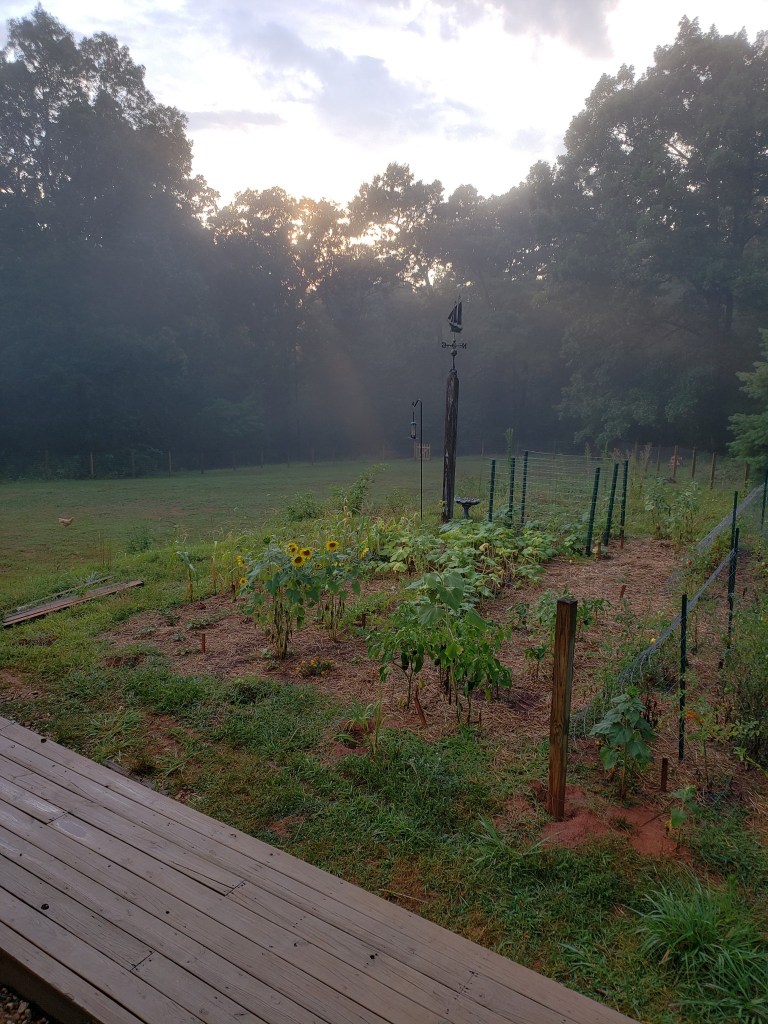
The original plot, before any regeneration.
We have always been gardeners. We built a little garden in the middle of the city in San Diego. We built raised beds at a small rental house in Charlottesville. When we bought our home and finally moved out to the country, the first thing we jumped into was creating a garden plot. The little patch of earth that we steward as our family’s food garden is a treasured and meditative spot on the property for us. When we bought our home in the spring of 2018, this little plot was a messy, grassy, weed-ridden hill that had once been an above ground pool, then was a spot for a trampoline, and now was a neglected patch of earth. The first season we lived here, we planted what we could and did our best, but it was really quite a mess. We did manage to yield a nice crop of sweet potatoes, an abundance of tomatoes, some scraggly beans, a few squash plants, and sunflowers, along with a LOT of weeds, and a lot of unfortunate garden pests in unhealthy soil.
Over the past two years, we have spent a lot of time reinvigorating this patch of earth, which comes to about 500 square feet. Our first major renovation was tilling the grassy patch before planting those first sweet potatoes and tomatoes. But our major renovation to the garden came the summer of 2019, when Spencer took the time to dig out and meticulously measure beds. Tilling itself was a major debate for us, and is not the right choice for everyone–it wasn’t our first choice either. Tilling can disrupt the natural cycles of soil, the ecosystem below ground, and the root network that may be benefiting the soil and protecting it from erosion. We made this choice out of haste, and the need to get rid of grass and weeds quickly.
Now that we have learned more about regenerative gardening, I wish we could go back and take a season or two to layer the soil with cardboard (unmarked, of course), straw, compost, and other regenerative solutions. But, we are where we are. When Spencer dug out beds and created the beautiful garden we work in today, we were able to add some regenerating elements, and we did layer in all the things we missed out on when we decided to till.
The beds became a lasagna of straw, compost, AZ sand, peat moss, and top soil. Straw and peat moss aerate the soil, which is a must for the thick Virginia clay that we steward here. AZ sand adds essential nutrients to the soil to invigorate it and help it get ready to host plants. Compost does the same, while also adding dead plants, chicken manure, and spent beer malts from Spencer’s brewing back into the earth–a lovely cycle! Top soil we used to fill up the remainder of the space, and our top soil was broke up clay soil that had already existed.
I am proud of what we have built so far, but we are certainly still learning how to be responsible and sustainable stewards of the land, how to rotate crops, how to provide nutrients back into the soil. The beautiful thing about gardening and farming is that it is ever evolving, as the earth, and gives you grace to learn and grow.
 Crump Family Farms
We also have clay heavy soil and I find trenching or double digging the first year you make a garden bed to be the right choice. But you have to do it right. When you dig the dirt out you put a lot of biomass in the clay at the bottom, for us it is wood chips and weeds. Then you flip the dirt grass side down in the hole. Then you till compost and ammendments into the top several inches, breaking up the dirt as you go until you’ve got about 6″ of good garden soil on top. This creates two zones of bioactivity – the bottom where the biomass got added and all the surface soil got buried and the top where new bioactivity is being built. Eventually these zones start to intermingle and it becomes a full foot of decent top soil instead of unproductive clay sludge. If you take care of the soil after that point you don’t need to do it again and it builds healthy soil fast.
LikeLike
Amazing, thank you so much for sharing your experience! We did very similar work in our clay soil the first year, and it is now healthy and thriving! I find it impossible to practice “no till” IMMEDIATELY in clay soil, but I totally agree with what you said–once you do that initial break up and layering, you have cultivated and restored an incredibly healthy soil system! Keep it up and thanks for sharing!
LikeLiked by 1 person